
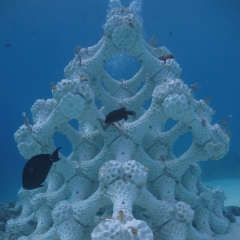
In the news cycle, the storms may be over, but for coastal communities, the impact on marine ecosystems is far from finished. We are actively working along affected shorelines to restore coral habitats, stabilize sediments, and deploy innovative PHA reef-mimicking structures designed to keep sand from eroding away.
Healthy coral ecosystems help protect coastlines from wave energy — and when storms hit, reefs can break, shift, or become buried under sediment. Our mission is to intervene early, restore structure, and help ocean life rebuild.
In the news cycle, Hurricane Ian may be over, but for the communities affected, the disaster has not ended. We’re on the ground in Charlotte County, Florida, providing whatever help and resources we can to families with pets, from veterinary care to pet supplies, as residents struggle to reassemble their lives amid the rubble.
How PHA Structures Help Restore Coral and Protect Beaches
PHA (polyhydroxyalkanoate) is a fully biodegradable, ocean-safe biopolymer that marine organisms naturally recognize. When shaped into reef-like modules, it:
-
Mimics natural coral skeletons
-
Provides immediate habitat for marine life
-
Traps and stabilizes sand
-
Reduces coastal erosion
-
Encourages coral larvae settlement
-
Dissolves naturally over time as the reef strengthens
These structures act as temporary scaffolding — helping the ocean heal faster.
Our Work in the Field
Just like land-based disaster relief focuses on rebuilding homes, our underwater teams focus on rebuilding ecosystems. After storms, coral fragments often scatter across the seafloor. We collect viable pieces and secure them onto PHA structures, giving them a safe place to grow.
As these corals establish themselves:
-
Fish populations increase
-
Algae becomes balanced
-
Water clarity improves
-
Sediment stays in place
The reef begins to function as a natural breakwater again.
The Steps of Coastal Restoration
1. Assessment & Mapping
Using drones and underwater surveys, we identify erosion hot spots and determine where PHA structures will have the greatest impact. The goal is to stabilize the area before further sand loss occurs.
2. Deployment of PHA Reef Modules
Technicians and divers install the structures along planned lines, mimicking the spacing and height of natural coral formations. This reshapes water flow and reduces the pull of sand offshore.
3. Coral Reattachment & Biodiversity Support
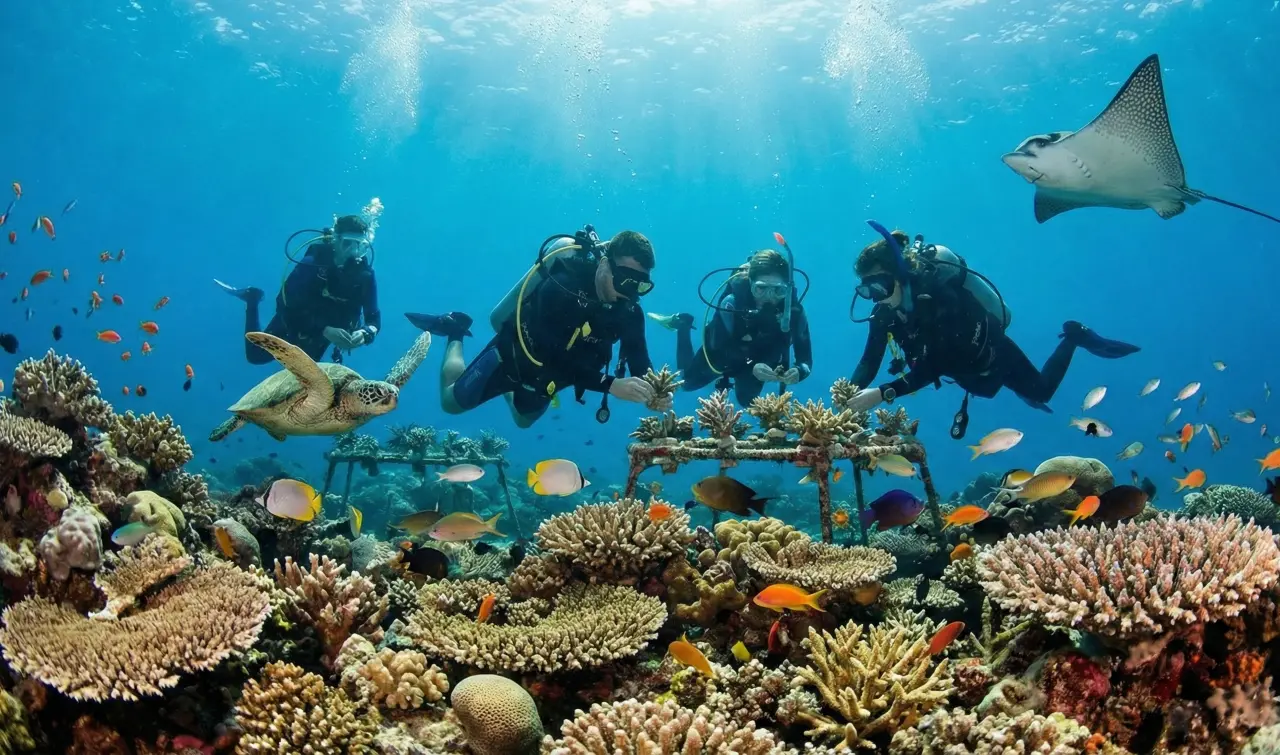
Recovered coral fragments and lab-grown corals are secured to the structures, giving them optimal growing conditions. As they thrive, the artificial structure gradually becomes a living reef.
Restoration Sites in Action
Our work has already begun at several pilot sites, where we are seeing measurable improvements in sediment retention and a surprising quick return of small reef fish.
Instead of allowing coastal damage to remain unseen beneath the waves, we bring attention and solutions through innovation, science, and committed divers who volunteer their time and expertise.
Supporting Coastal Protection & Coral Recovery
Beach erosion threatens homes, tourism, and natural habitats — but it can be reduced by rebuilding the coral systems that historically protected our shorelines for thousands of years.
PHA reef structures offer a rare combination of safety, sustainability, and scientific precision. Together with coral restoration efforts, they create a resilient system that helps oceans bounce back.
We are honored to help restore reefs, protect coastlines, and support communities who rely on the ocean every day.
Comments are closed.